

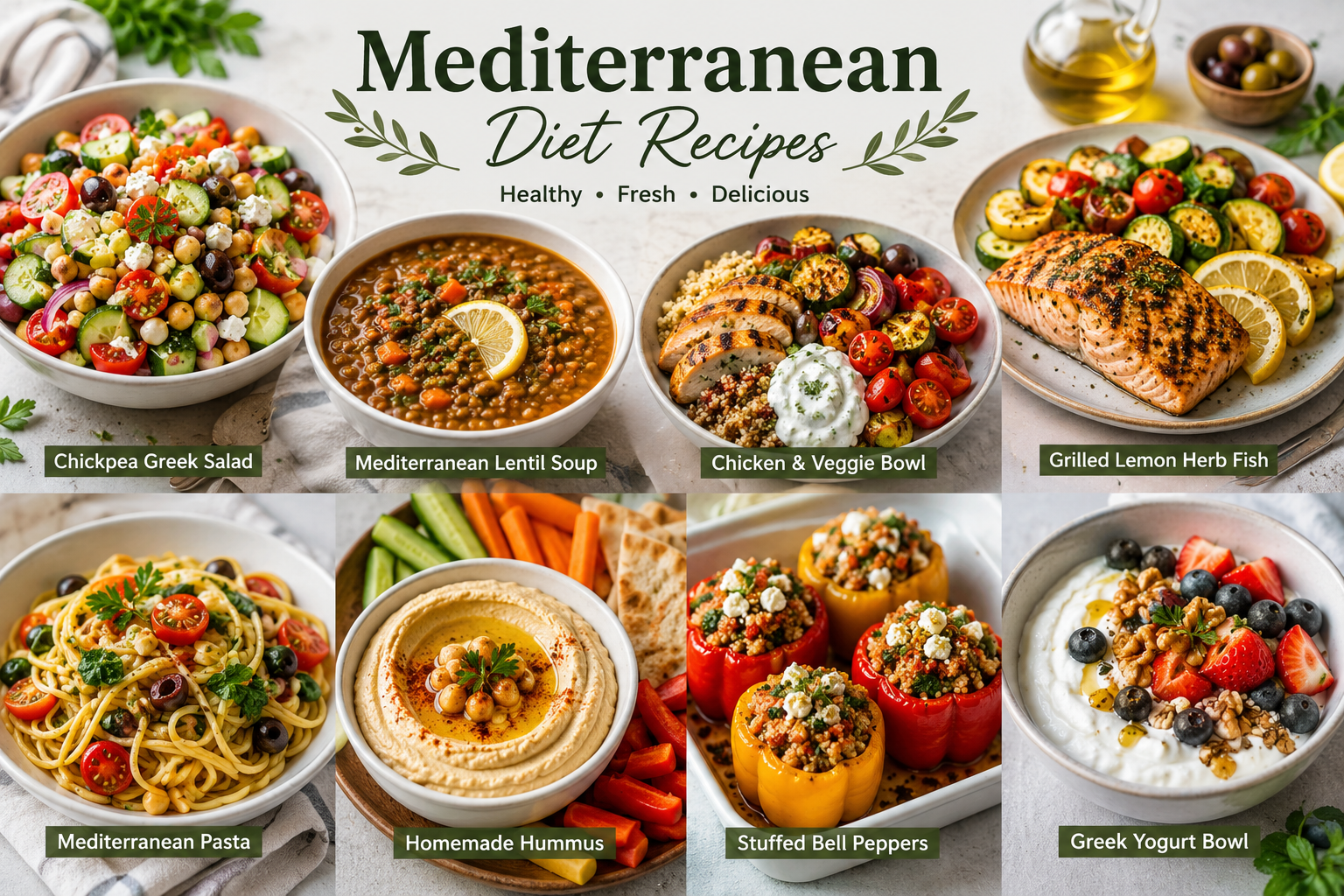
The Mediterranean Diet Recipes has earned a reputation as one of the most enjoyable ways to eat well without making food feel boring or restrictive. Instead of relying on complicated rules, it focuses on fresh vegetables, fruits, whole grains, beans, nuts, seeds, olive oil, fish, and moderate amounts of dairy and poultry. What makes it especially appealing is that these foods can be combined into incredibly flavorful meals that work for breakfast, lunch, dinner, and even snacks. You do not need to be a professional cook or spend hours in the kitchen to enjoy them.
What really sets Mediterranean-style cooking apart is the balance between nutrition and flavor. Garlic, lemon, fresh herbs, tomatoes, olives, spices, and extra-virgin olive oil can turn simple ingredients into meals that feel satisfying and restaurant-worthy. Many traditional recipes also use straightforward cooking techniques such as roasting, grilling, simmering, and tossing ingredients together. This makes Mediterranean diet recipes practical for busy households as well as people who genuinely enjoy spending time in the kitchen.
Another reason these recipes have become so popular is their flexibility. You can adjust portions, swap ingredients, use seasonal produce, and create meals based on what is already in your pantry. The goal is not perfection. It is about building an eating pattern around wholesome foods while still enjoying meals with plenty of variety and character. In this guide, you will find practical Mediterranean diet recipes and ideas that are easy to prepare, flavorful, and suitable for everyday cooking.
What Makes Mediterranean Diet Recipes So Healthy?
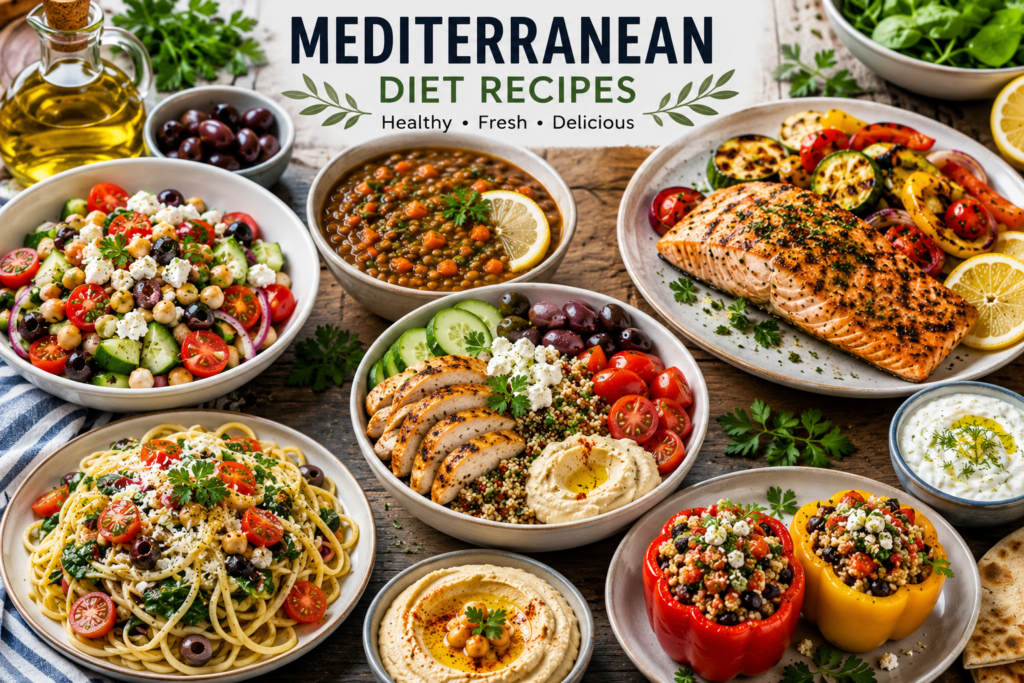
Mediterranean diet recipes are generally built around minimally processed foods. Vegetables, legumes, whole grains, fruits, nuts, seeds, and olive oil form the foundation of many meals, while fish and seafood are commonly included as important protein sources. This combination naturally provides fiber, healthy fats, vitamins, minerals, and plant compounds without requiring you to count every calorie or eliminate entire food groups.
Olive oil is one of the signature ingredients in Mediterranean cooking. Instead of relying heavily on butter or highly processed sauces, many recipes use olive oil in dressings, marinades, sautés, and roasted dishes. Vegetables also play a starring role rather than being treated as a small side dish. A plate might include tomatoes, cucumber, roasted peppers, leafy greens, eggplant, zucchini, onions, or spinach alongside grains, beans, or fish.
The overall approach also emphasizes variety. One day Mediterranean Diet Recipes you might enjoy lentil soup, while the next could feature grilled fish with roasted vegetables and a simple grain salad. This variety makes it easier to get a broad range of nutrients while keeping meals interesting. Just as importantly, Mediterranean-style eating leaves room for enjoyment, which can make it much easier to maintain as a long-term lifestyle rather than treating it as a temporary diet.
Easy Mediterranean Breakfast Recipes
A Mediterranean-inspired breakfast does not have to look Mediterranean Diet Recipes like a traditional English or American breakfast. A simple bowl of plain yogurt topped with berries, walnuts, chia seeds, and a small drizzle of honey can be filling and refreshing. The combination of protein, fiber, healthy fats, and fruit creates a balanced start to the day, especially when you choose unsweetened yogurt and keep added sugars modest.
Another excellent option is whole-grain toast with mashed avocado, sliced tomatoes, and a sprinkle of herbs. You can add a boiled egg for extra protein or a few olives for a more savory Mediterranean Mediterranean Diet Recipes touch. Lemon juice, black pepper, and a little extra-virgin olive oil can instantly brighten the flavor without requiring a complicated recipe.
For mornings when you have more time, try a vegetable omelet made with spinach, tomatoes, onions, and herbs. A small amount of feta can add creaminess and a salty flavor without dominating the dish. Serve the omelet with whole-grain bread and fresh fruit, and you have a satisfying breakfast that feels substantial without being overly heavy.
Greek-Style Chickpea Salad
Chickpea salad is one of the easiest Mediterranean diet recipes to make, and it is ideal for meal preparation because it holds up well in the refrigerator. Start with cooked chickpeas and combine them with diced cucumber, tomatoes, red onion, parsley, and a small amount of feta. Add olives for a deeper savory flavor if you enjoy them.
The dressing can be as simple as extra-virgin olive oil, fresh lemon juice, garlic, black pepper, and dried oregano. Instead of covering the salad with a heavy dressing, toss everything gently so each ingredient keeps its texture. The chickpeas provide protein and fiber, while the vegetables add freshness and crunch.
This salad is versatile enough to serve as a complete lunch or as a side dish with grilled fish or chicken. You can also add cooked quinoa or bulgur if you want to make it more substantial. For extra variety, replace cucumber with roasted zucchini or add chopped roasted red peppers. It is the type of recipe that becomes easier and better Mediterranean Diet Recipes the more often you make it.
Mediterranean Lentil Soup
Lentil soup is a classic choice when you want a comforting meal that is affordable, nutritious, and easy to prepare. Begin by sautéing onion, carrot, and celery in olive oil until softened. Add garlic, lentils, chopped tomatoes, vegetable broth, and herbs such as oregano or thyme. Let everything simmer until the lentils are tender and the flavors have blended together.
A splash of lemon juice at the end makes a surprisingly big Mediterranean Diet Recipes difference. It cuts through the richness and gives the soup a fresh finish. You can also add spinach during the final few minutes of cooking for extra greens. If you like a little heat, a pinch of chili flakes works beautifully with the tomato and lentil combination.
One of the best things about lentil soup is how practical it is. Mediterranean Diet Recipes It can be made in a large batch and stored for several meals, making it especially useful for busy weeks. The soup often tastes even better the next day because the herbs, tomatoes, and vegetables have more time to develop their flavor.
Mediterranean Chicken and Vegetable Bowl
A chicken and vegetable bowl is an easy way to turn Mediterranean ingredients into a complete meal. Season chicken breast or boneless chicken thighs with garlic, lemon juice, oregano, paprika, black pepper, and olive oil. Grill, pan-cook, or roast the chicken until fully cooked and slice it into bite-sized pieces.
For the base, use cooked quinoa, brown rice, bulgur, or another Mediterranean Diet Recipes whole grain you enjoy. Add roasted zucchini, bell peppers, red onion, and tomatoes. A spoonful of hummus or plain Greek yogurt can provide a creamy element without the need for a heavy sauce.
Finish the bowl with fresh parsley, cucumber, olives, and a squeeze of lemon. The combination of textures makes the meal much more enjoyable than simply serving chicken and vegetables on a plate. You can prepare the ingredients ahead of time and assemble individual bowls throughout the week, which makes this recipe excellent for Mediterranean Diet Recipes meal prepping.
Mediterranean Grilled Fish With Lemon and Herbs
Fish is an important part of many Mediterranean eating patterns, and grilled fish can be one of the simplest recipes to prepare. Use a firm fish such as salmon, cod, sea bass, or another variety you enjoy. Mediterranean Diet Recipes Brush it lightly with olive oil, then season with garlic, lemon zest, parsley, oregano, black pepper, and a small amount of salt.
Cook the fish on a grill, grill pan, or in the oven until it flakes easily with a fork. Avoid overcooking it because dry fish can quickly lose the delicate texture that makes it appealing. A final squeeze of lemon just before serving adds brightness and brings the herbs together.
Serve the fish with roasted vegetables and a whole grain, or pair it with a fresh tomato and cucumber salad. You can also prepare a quick yogurt sauce with Greek yogurt, lemon juice, garlic, and chopped herbs. The result is a meal that feels light and fresh while still being filling enough for dinner.
Mediterranean Pasta With Tomatoes, Spinach, and Garlic
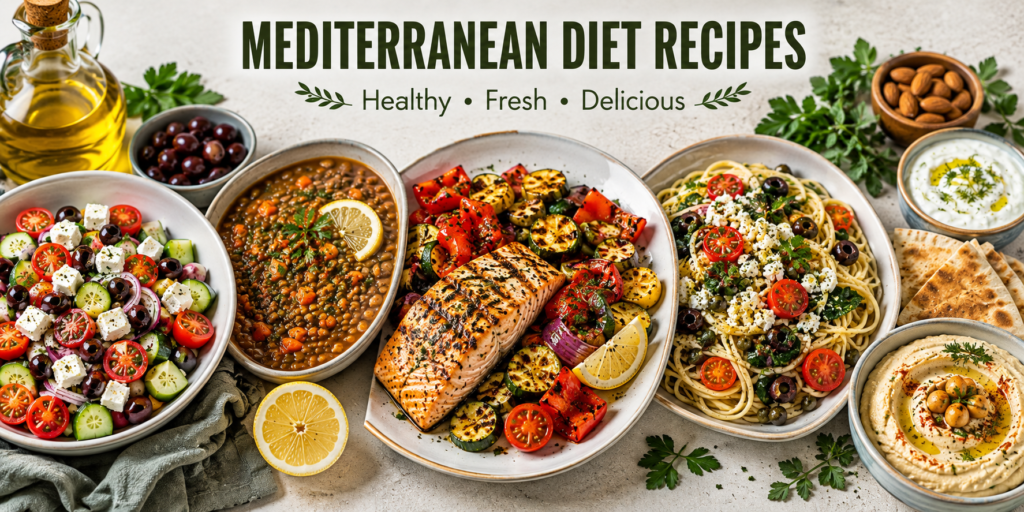
Pasta can absolutely fit into Mediterranean-style eating when it is paired with nutrient-rich ingredients. Whole-grain pasta works particularly well because it offers more fiber and a hearty texture. Cook the Mediterranean Diet Recipes pasta according to the package instructions and reserve a little of the cooking water before draining.
In a large pan, warm olive oil and gently cook minced garlic until fragrant. Add cherry tomatoes and let them soften until they begin releasing their juices. Stir in fresh spinach and allow it to wilt. Toss the vegetables with the pasta, adding a splash of reserved pasta water to create a light coating.
Finish with fresh basil, black pepper, and a modest amount of grated Mediterranean Diet Recipes Parmesan or crumbled feta. You can also add white beans, grilled chicken, or canned tuna for additional protein. This recipe demonstrates that Mediterranean cooking does not require elaborate sauces; a handful of fresh ingredients can create a surprisingly flavorful pasta dish.
Homemade Hummus With Fresh Vegetables
Hummus is a useful staple for anyone interested in Mediterranean diet recipes because it can be served in several different ways. Traditional hummus combines chickpeas, tahini, lemon juice, garlic, olive oil, and seasonings. Blend the ingredients until smooth, adding a little water if necessary to achieve your preferred texture.
The key to making good hummus is getting the balance right. Too much tahini can make it heavy, while too much lemon can overpower the chickpeas. Start with small amounts, blend, taste, and adjust. A sprinkle of paprika, chopped parsley, or a drizzle of olive oil can make the finished dish look and taste more appealing.
Serve hummus with cucumber, carrots, bell peppers, and celery Mediterranean Diet Recipes for a simple snack. It can also be spread on whole-grain toast or used as a sauce in a chicken or vegetable wrap. Because it keeps well in the refrigerator, homemade hummus is a convenient option to prepare ahead of time.
Mediterranean Stuffed Bell Peppers
Stuffed bell peppers are a great way to combine vegetables, grains, legumes, and herbs into one satisfying dish. Start by cutting bell peppers in half and removing the seeds. Prepare a filling with cooked quinoa or brown rice, chickpeas, chopped tomatoes, onion, parsley, garlic, and Mediterranean herbs.
Spoon the mixture into the peppers and bake until the peppers become tender. A small amount of feta can be added near the end of cooking if you want a creamy, salty finish. For a richer filling, chopped mushrooms or spinach can also be mixed into the grain mixture.
These peppers work well as either a vegetarian main dish or a side. They can also be prepared in advance and reheated when needed. Because the ingredients are inexpensive and adaptable, stuffed peppers are especially useful when you want a healthy meal without buying a long list of specialty ingredients.
Mediterranean Breakfast Bowl With Yogurt and Fruit
A yogurt bowl is perhaps one of the fastest Mediterranean-inspired meals you can make. Choose plain Greek yogurt and top it with seasonal fruit such as berries, apples, oranges, peaches, or pomegranate seeds. Add walnuts or almonds for crunch and healthy fats.
For extra fiber, sprinkle in chia seeds, ground flaxseed, or a small amount of unsweetened whole-grain granola. A light drizzle of honey can add sweetness, but it is not necessary when the fruit is ripe and naturally flavorful. Cinnamon can also provide a pleasant warm note without adding sugar.
The beauty of this breakfast is its flexibility. You can change the fruit and toppings depending on what is available. On hot mornings, fresh berries and citrus are especially refreshing, while chopped apple, pear, and walnuts work well during cooler seasons. The recipe is simple enough for rushed mornings yet satisfying enough to keep hunger under control for longer.
Mediterranean Roasted Vegetables
Roasted vegetables are a simple foundation for countless Mediterranean meals. Choose vegetables such as zucchini, eggplant, bell peppers, onions, tomatoes, and carrots. Cut them into similar-sized pieces so they cook evenly, then toss them lightly with olive oil, garlic, oregano, and black pepper.
Spread everything across a baking sheet without overcrowding the pan. Give the vegetables enough room to roast instead of steam. Cook until the edges are browned and the vegetables are tender. A little lemon juice or balsamic vinegar added after roasting can bring out their natural sweetness.
These vegetables can be served alongside fish, chicken, or legumes, but they are also useful as ingredients in other meals. Add them to grain bowls, wraps, salads, omelets, or pasta. Making a large tray at the beginning of the week can save considerable time because the cooked vegetables can be reused in different ways.
Mediterranean Bean and Tomato Stew
For a comforting one-pot meal, a bean and tomato stew is hard to beat. Start with onion and garlic cooked in olive oil, then add canned tomatoes, white beans, chopped carrots, and herbs. Let the mixture simmer gently so the flavors can develop.
You can add spinach, kale, zucchini, or other vegetables depending on what you have available. A pinch of smoked paprika gives the stew extra depth, while oregano and thyme create a classic Mediterranean profile. If the stew becomes too thick, add a little vegetable broth to loosen it.
Serve it with whole-grain bread or a small portion of brown rice. The beans make the stew naturally filling, while the tomatoes and vegetables provide freshness and color. It is also an excellent example of how Mediterranean-style cooking can be inexpensive without sacrificing flavor.
Tips for Making Mediterranean Recipes Taste Better
The easiest way to improve Mediterranean recipes is to pay attention to acidity. Lemon juice, vinegar, and fresh tomatoes can make rich ingredients taste lighter and more balanced. Adding acidity at the end of cooking is often more effective than using a large amount at the beginning, so taste your food before serving and adjust gradually.
Fresh herbs are another simple upgrade. Parsley, basil, mint, dill, and oregano can completely change the character of a dish. Dried herbs are useful for longer cooking times, but fresh herbs added at the end can provide a brighter flavor. Even a small handful can make an ordinary meal feel much more polished.
Texture matters, too. Try combining creamy hummus or yogurt with crisp cucumber, crunchy nuts, roasted vegetables, or toasted whole grains. Good Mediterranean cooking is not only about nutrition; it is about making every bite interesting. When meals are satisfying and enjoyable, healthy eating becomes much easier to maintain.
How to Plan a Mediterranean-Style Week of Meals
Meal planning becomes easier when you prepare a few basic ingredients in advance. Cook a batch of whole grains, wash and chop some vegetables, prepare a container of hummus, and make a simple lemon-herb dressing. These components can then be mixed and matched throughout the week rather than forcing you to follow a rigid meal plan.
For example, roasted vegetables can be served with grilled fish one night, mixed with quinoa and chickpeas the next day, and added to an omelet later in the week. Cooked chicken can be used in bowls, salads, and wraps. This approach reduces food waste and saves time because you are not starting from scratch for every meal.
It also helps to keep a few reliable pantry staples on hand. Canned chickpeas and beans, whole grains, canned tomatoes, olive oil, nuts, seeds, herbs, spices, and whole-grain pasta can form the foundation of many quick recipes. With these ingredients available, creating a balanced meal becomes a matter of combining rather than complicated cooking.
Common Mistakes to Avoid With Mediterranean Diet Recipes
One common mistake is assuming that every Mediterranean food automatically becomes healthy simply because it contains olive oil, vegetables, or whole grains. Portions still matter, and heavily processed foods can remain less nutritious even when combined with healthier ingredients. Focus on the overall quality of the meal rather than relying on a single ingredient to make it healthy.
Another mistake is making meals unnecessarily complicated. Mediterranean cooking is often at its best when ingredients are simple and allowed to shine. You do not need ten spices, expensive superfoods, or complicated sauces to create a delicious dish. A few fresh ingredients, good seasoning, and proper cooking technique can be enough.
Finally, do not feel pressured to follow a rigid menu. The Mediterranean diet is better understood as a flexible pattern of eating rather than a strict list of recipes. Adapt meals to your budget, culture, schedule, and taste preferences. Consistency matters much more than making every meal look traditional.
Final Thoughts on Mediterranean Diet Recipes
Mediterranean diet recipes offer an appealing combination of flavor, simplicity, and wholesome ingredients. From chickpea salads and lentil soups to grilled fish, stuffed peppers, yogurt bowls, and roasted vegetables, there are countless ways to create meals that feel satisfying without relying heavily on ultra-processed ingredients.
The biggest advantage is flexibility. You can use seasonal produce, switch between different grains and legumes, choose the protein sources you enjoy, and adjust recipes according to your schedule. That freedom makes Mediterranean-style eating realistic for everyday life rather than something reserved for special occasions.
Most importantly, healthy eating does not have to mean giving up the pleasure of food. By focusing on vegetables, legumes, whole grains, fruit, nuts, seeds, fish, and flavorful ingredients such as olive oil, lemon, garlic, and fresh herbs, you can build meals that are both nourishing and genuinely enjoyable. Once a few Mediterranean recipes become regular favorites, healthy cooking can start to feel less like a task and more like something to look forward to.


