

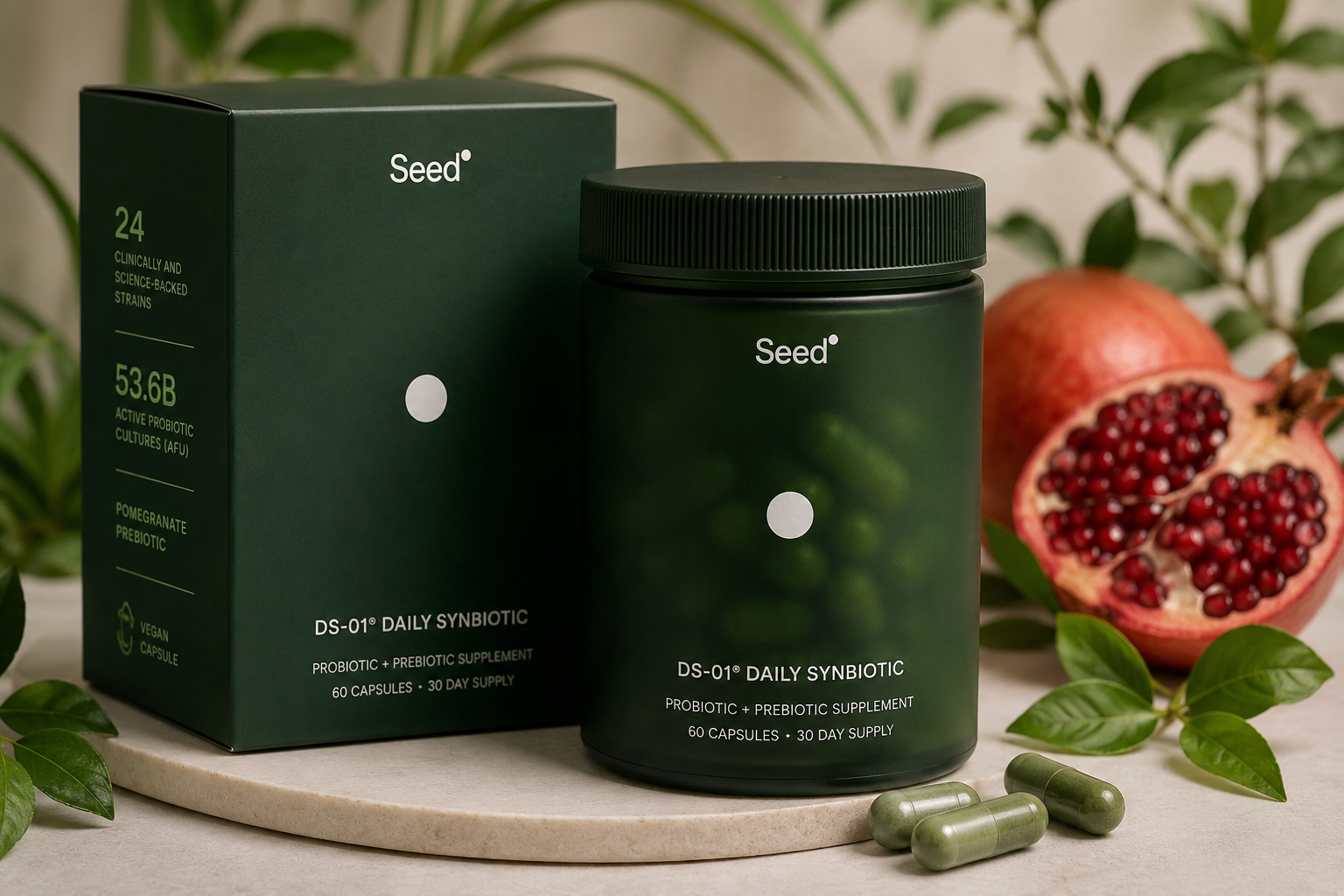
Seed probiotics have become a popular name in the modern wellness and gut-health space, especially among people looking for something more sophisticated than a basic probiotic capsule. The brand is best known for its DS-01 Daily Synbiotic, a formula designed to combine probiotics and prebiotics in one daily supplement. Rather than focusing only on the number of bacteria in a capsule, Seed emphasizes specific strains, delivery technology, and the interaction between beneficial microbes and the existing gut microbiome.
The interest in Seed probiotics also reflects a bigger change in how people think about digestive health. Probiotics are no longer viewed simply as supplements taken after a course of antibiotics or when the stomach feels unsettled. Researchers are studying how particular microbial strains can interact with the gut environment, while consumers are becoming more interested in products that have identifiable strains and human clinical research behind them. Still, probiotic science is complicated, and a high CFU count alone does not automatically mean a product will work for everyone.
So, what exactly makes Seed probiotics different, and are they worth considering? This guide takes a closer look at Seed’s approach, its best-known DS-01 formula, how probiotics and prebiotics work together, possible benefits, potential drawbacks, and the practical things to know before adding a synbiotic to a daily routine.
What Are Seed Probiotics?
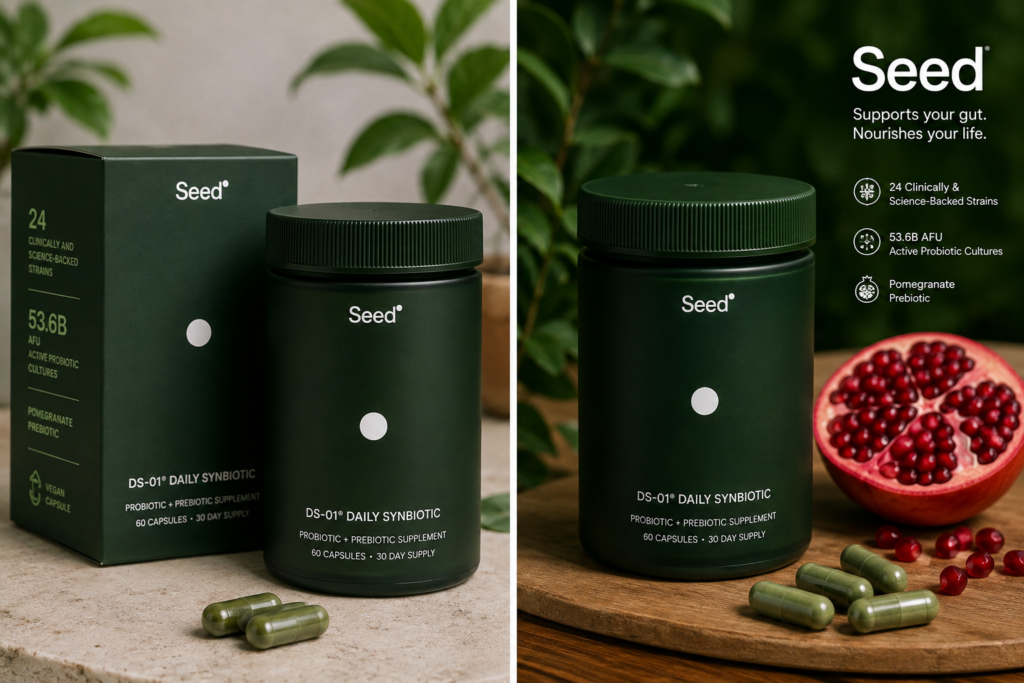
Seed is a Seed Probiotics microbiome-focused company that develops synbiotic products, meaning products that combine probiotics with a prebiotic component. Its flagship DS-01 Daily Synbiotic contains 24 probiotic strains along with a non-fermenting prebiotic compound derived from Indian pomegranate. According to Seed, the formulation is designed around strain-specific functions rather than simply filling a capsule with a large number of generic bacterial cultures.
That distinction matters because the word “probiotic” does not refer to one single type of bacteria. Probiotics are living microorganisms that can provide a health benefit when consumed in adequate amounts, but their effects can vary substantially depending on the species and even the specific strain. The NIH notes that not every product labeled as a probiotic has demonstrated a proven health benefit, which is why identifying the organisms in a supplement is more useful than looking at a broad label alone.
Seed’s DS-01 formula primarily includes strains from the Lactobacillus and Bifidobacterium groups, along with other selected organisms. Seed states that its formulation uses 24 Seed Probiotics strains and that the daily dose provides 53.6 billion AFU of viable probiotic cells. The company also uses the term “synbiotic” because its product pairs the probiotic organisms with a prebiotic intended to support the microbiome.
How Does Seed DS-01 Work?
One of the main ideas behind Seed probiotics is that taking beneficial microorganisms is only part of the equation. A probiotic supplement has to survive the journey through the digestive system in sufficient numbers before it can interact with the intestinal environment. Seed says its DS-01 system uses a precision-release design intended to protect the probiotic strains as they move through the upper gastrointestinal tract and release them farther Seed Probiotics along the digestive system.
The company calls this delivery system ViaCap, and Seed reports that it has tested the technology using a laboratory model that simulates human digestion. The goal is straightforward: help more of the organisms reach the lower part of the digestive tract alive. That concept is important because probiotics are living microorganisms, so survival and stability are meaningful considerations when evaluating any probiotic supplement.
DS-01 also includes a prebiotic component made from polyphenolic compounds, including punicalagins sourced from Indian pomegranate. Seed describes these as microbiota-accessible polyphenolic precursors rather than traditional fermentable fibers. In simple terms, the product is trying to support both sides of the equation: introduce selected microorganisms while also providing compounds intended to interact with the existing microbiota.
Seed Probiotics and Gut Health
Gut health is probably the biggest reason people search for Seed probiotics in the first place. The digestive system contains a complex microbial community that interacts with food, the intestinal lining, and many processes taking place inside the body. Probiotics are primarily active in the gastrointestinal tract, although researchers are investigating possible links between the gut microbiome and other areas of health.
It is important, however, not to think of probiotics as a universal solution for every digestive issue. Different strains can have different effects, and a product that helps one person may produce a smaller benefit for another. The NIH emphasizes that there is still a great deal researchers do not know about which probiotic organisms Seed Probiotics are most useful, what dosage is best for specific situations, and which people are most likely to benefit.
Seed has conducted clinical research specifically on DS-01 rather than relying only on studies of unrelated probiotic products. Its reference library reports a randomized, double-blind, placebo-controlled trial involving 350 generally healthy adults experiencing bloating, indigestion, gas, and irregular bowel habits. Seed reports improvements in bloating, gas, abdominal discomfort, bowel regularity, and digestive quality-of-life measures compared with placebo over six weeks. These findings are encouraging, although they should be understood as evidence about DS-01 in the studied population rather than proof that every probiotic will have the same effects.
Potential Benefits of Seed Probiotics
One potential benefit is support for more comfortable digestion. In the clinical trial reported by Seed, DS-01 was associated with statistically significant reductions in bloating and gas compared with placebo, along with improvements in abdominal discomfort. For people who occasionally feel overly full, bloated, or irregular, these are practical outcomes that matter more than simply seeing a large number of probiotic organisms printed on a bottle.
Another area of interest is bowel regularity. Seed reports that participants using DS-01 experienced improvements in regularity and occasional constipation-related discomfort. That does not mean the product should be treated as a laxative or as a treatment for chronic constipation. Instead, the research suggests that a carefully formulated synbiotic may influence digestive comfort and bowel habits in some generally healthy adults.
Seed also positions DS-01 as a broader microbiome product rather than a supplement aimed at digestion alone. The company describes benefits being investigated across areas such as gut barrier function, skin health, immune function, cardiovascular health, and micronutrient synthesis. These areas are scientifically interesting, but it is still wise to distinguish a researched mechanism or potential area of interest from a guaranteed health outcome. Probiotic effects can be strain-specific, and evidence for one outcome does not automatically establish another.
What Is Actually Inside Seed DS-01?
The standout feature of DS-01 is its multi-strain design. Seed Probiotics Seed states that the formula contains 24 probiotic strains, with strains selected and characterized through research collaborations and academic institutions. The formulation is divided into different blends, including digestive, dermatological, cardiovascular, and micronutrient-related groups. The company’s reference library lists individual strains and the amount of viable organisms associated with each blend.
The product also includes its prebiotic component in the outer capsule. Seed describes the prebiotic as a concentrated blend of polyphenolic compounds from Indian pomegranate, including punicalagins. Unlike familiar prebiotic fibers such as inulin, this material is designed to function through a different approach. Seed says the DS-01 daily dose includes 400 mg of these polyphenolic compounds.
The capsule itself is another interesting part of the design. Seed Probiotics Seed says the outer capsule is vegan and acid-resistant, while the inner capsule houses the probiotic organisms. The company uses chlorophyllin in the outer capsule and hypromellose and water in the inner capsule. For consumers who care about formulation details, this level of ingredient disclosure can make the product easier to evaluate than a supplement that lists only vague “proprietary probiotic blends.”
Seed Probiotics vs. Traditional Probiotic Supplements
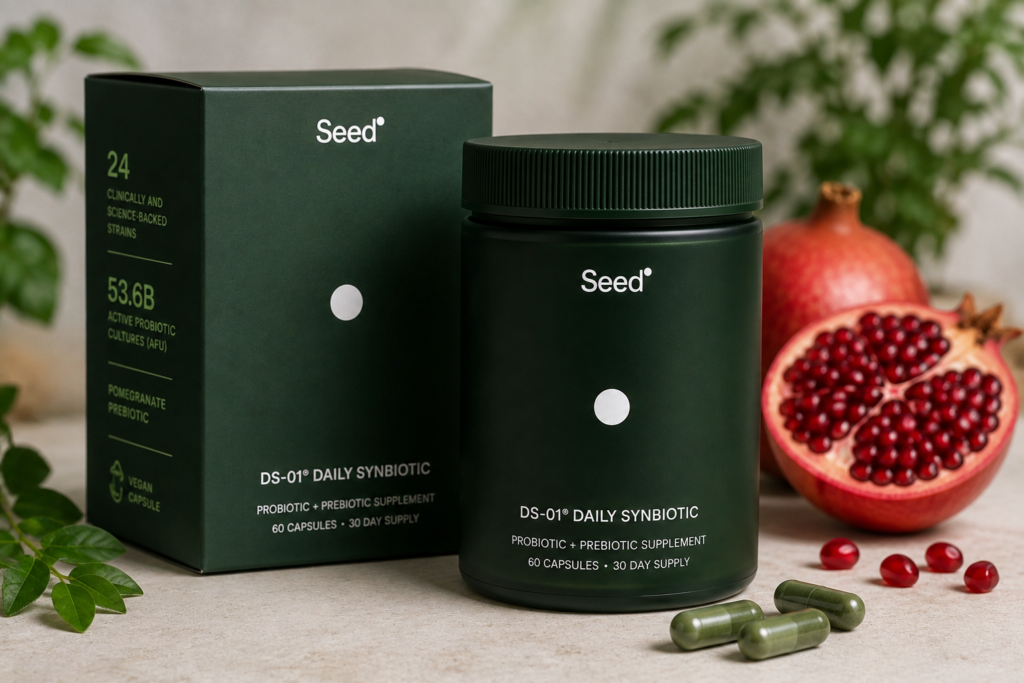
A basic probiotic supplement may contain one or a few strains, while Seed’s DS-01 uses a larger collection of strains. But more strains do not automatically mean a better probiotic. According to the NIH, probiotic benefits depend on the organisms used and the evidence supporting them, which means the quality of formulation and research matters at least as much as the number of strains printed on a label.
Another difference is the inclusion of a prebiotic. Traditional probiotics focus on delivering live microorganisms, whereas synbiotics combine probiotics and prebiotic components. The reasoning is that the probiotic organisms may benefit from an environment that supports their activity, while the prebiotic compounds can also interact with Seed Probiotics microorganisms already present in the gut. Seed builds its entire product around this combined concept.
Price is another practical difference that consumers should consider. A more complicated formulation, specialized capsule system, and research program can make a premium probiotic substantially more expensive than a supermarket probiotic or a food-based option such as yogurt. Whether the extra cost makes sense depends on your goals, budget, tolerance, and interest in a research-backed branded formulation. A premium label by itself is never a substitute for evidence.
How to Take Seed Probiotics
Seed markets DS-01 as a daily synbiotic for adults 18 and older. The company recommends following the product directions and says people who are pregnant, nursing, taking medications, or managing a medical condition should consult a healthcare professional before use. That is a sensible approach because dietary supplements can interact with individual circumstances, and not every supplement is appropriate for every person.
When starting any probiotic, consistency is generally more Seed Probiotics useful than taking a large amount occasionally. The point of a daily synbiotic is to provide the formulation regularly rather than treating it like a quick digestive rescue product. People also respond differently to changes in fiber, prebiotics, and probiotics, so paying attention to how your body reacts during the first few weeks can be helpful.
It is also worth remembering that supplements work alongside basic lifestyle habits rather than replacing them. A varied diet containing fiber-rich plant foods, adequate hydration, regular physical activity, and good sleep can all contribute to overall well-being. A probiotic is best viewed as one possible addition to a broader routine, not as a substitute for eating well or seeking medical care when symptoms are persistent.
Are There Any Downsides to Seed Probiotics?
One of the most obvious downsides is cost. Seed is positioned as a premium microbiome company, and sophisticated formulations often come with a higher price than ordinary probiotic products. For someone who has no digestive complaints and already has a balanced diet, paying considerably more for an advanced synbiotic may not provide enough noticeable value to justify the expense.
Another consideration is that probiotics are not universally effective. Seed Probiotics The NIH states that research has shown promise in several health areas, but it also emphasizes that researchers still do not know which probiotic products are useful for which people in many situations. This means an expensive probiotic should not be purchased with the expectation that it will definitely fix bloating, constipation, skin problems, or other symptoms.
Some people may also experience temporary digestive changes when introducing a new supplement, particularly one that contains prebiotic compounds. Everyone’s gut environment is different, and the response to a synbiotic can vary. More importantly, people with serious illnesses, significantly weakened immune systems, or other medical concerns should discuss probiotic use with a qualified healthcare professional rather than assuming that “natural” automatically means risk-free. The NIH advises consumers to consult a healthcare provider when considering probiotic supplements, particularly when there are health concerns.
Who Might Consider Seed Probiotics?
Seed probiotics may appeal to adults who specifically want a multi-strain synbiotic rather than a conventional one- or two-strain probiotic. Someone dealing with occasional bloating, gas, digestive discomfort, or irregularity may be particularly interested because DS-01 has been evaluated in generally healthy adults with those kinds of complaints. The available clinical evidence makes it more interesting than a product that has no human research on its complete formulation.
They may also appeal to people who care about ingredient transparency and formulation technology. Seed provides a detailed strain list, explains its capsule and delivery technology, and publishes a reference library describing its formulation and clinical work. For consumers who enjoy researching supplements before buying them, this is a useful advantage because it provides more information than a simple marketing label.
At the same time, not everyone needs a premium probiotic. If Seed Probiotics you have no digestive concerns, eat a diverse diet, and are looking at probiotics simply because they are trending online, it may be worth stepping back and asking what outcome you actually want. A supplement should have a purpose in your routine, and the decision becomes easier when you compare that purpose with the cost, evidence, ingredients, and realistic expectations.
How to Choose a Good Probiotic
A smart way to evaluate a probiotic is to look beyond the front of the bottle. Check the exact genus, species, and strain information instead of relying only on phrases such as “advanced probiotics” or “maximum strength.” Probiotic strains are identified with specific designations, and evidence can differ between strains that belong to the same species. The NIH explains that probiotic identity and strain information are important when assessing these products.
Next, look for evidence related to the actual product or specific strains in it. A study on one Lactobacillus strain does not automatically prove that a completely different strain will have the same effect. The International Scientific Association for Probiotics and Prebiotics has emphasized that specific health claims require appropriate evidence, and the strength of the evidence depends on the particular microorganism, outcome, and formulation being studied.
Finally, consider stability, storage, dosage, and quality control. Because probiotics contain living organisms, manufacturing and storage matter. It is also worth checking whether the company explains how viability is measured and whether it provides meaningful information about its testing. Seed, for example, discusses its delivery system and laboratory testing in considerable detail, which gives consumers more context when comparing it with less transparent products.
Final Verdict: Are Seed Probiotics Worth Trying?
Seed probiotics stand out because they approach supplementation as a microbiome system rather than simply adding a large amount of bacteria to a capsule. DS-01 combines 24 probiotic strains with a pomegranate-derived prebiotic and uses a specialized capsule design intended to improve delivery through the digestive tract. Those features make the product more sophisticated than many basic probiotic supplements.
The most important point, though, is the research. Seed reports a randomized, double-blind, placebo-controlled study involving 350 generally healthy adults, with improvements in bloating, gas, abdominal discomfort, regularity, and digestive quality of life over six weeks. That is meaningful evidence for the specific product and population studied, although it should not be interpreted as a guarantee for every consumer or every health problem.
Overall, Seed probiotics can be an interesting option for adults who want a premium synbiotic with a detailed strain profile and clinical research behind the finished formulation. They are not magic pills, and the higher price will not make sense for everyone. The best way to look at Seed is as one evidence-informed tool that may support digestive health as part of a healthy lifestyle, rather than as a replacement for nutritious food, good daily habits, or professional medical advice.


